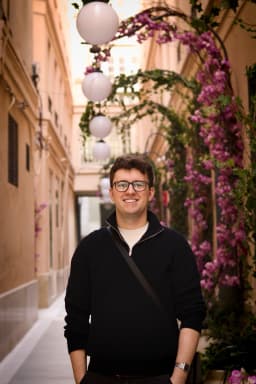
Reflection on My University Studies as I Am in the First Year Again
After two years at the FI MUNI, I walked away and started over at KISK. This is the story of discovering that sometimes the "wrong" path leads you exactly where you need to be.
15 min readBranislav Mateas
Copy post as Markdown
On this page
Disclaimer: Everything here is just my opinion and how I viewed things. Your experience may have varied.
Here's something you don't hear every day: I'm a first-year university student. Again.
Not because I changed countries or took a gap year. After two years at the Faculty of Informatics, I walked away - somewhere between failing out and strategic exit - and started over at a completely different department.
This article is one of many to come in my portfolio, created as an assignment for the ISKB03 Information Services and Retrieval course, part of my current studies at the Faculty of Arts at Masaryk University, specifically at the Department of Information Studies and Library Science, also known as KISK.
I'm currently pursuing a combined bachelor's degree with KISK as my major and Computer Science as a minor, but it wasn't always this way. For the past two years, I studied exclusively at the Faculty of Informatics in the Programming and Application Development program - essentially computer science with less mathematics and more programming.
After more than half a semester, it's time to evaluate and compare both of these programs at Masaryk University.
Why Leave After Two Years?
But first, why would I abandon a nearly completed program after two years? Let me provide some background.
People always told me I had big potential. Perfect marks throughout primary and high school made that narrative easy to believe. So it was quite surprising to other people when I decided to attend a technical secondary school instead of a grammar school. But I always knew what I wanted to do - computer science. Two things primarily influenced this decision: my excellent computer science teacher in elementary school and Farming Simulator 2015.
I wanted to play Farming Simulator 2015. My computer couldn't run it. That was annoying, but also - why? What was actually happening inside the computer when I tried to launch the game? What made some computers able to run it and others not?
I started looking things up. One question led to another. How computers worked led to how programs worked led to - well, maybe I could try making something myself.
I had played around with programming before in a program called Imagine (yes, the turtle graphics), but this felt different. I actually cared about understanding it. Soon I was messing around with HTML and CSS on a website called akonaweb.sk, trying to build things, breaking things, figuring out why they broke.
Then came my first client project. €20. I was 15, working on a Windows XP machine, constantly alt-tabbing whenever my mom walked by (I don't know why, just teenage instinct).
Here's the thing - I really thought I knew everything. PHP, SQL, how websites worked. I was ready to build anything. Then reality hit: if I hard-coded everything from scratch, a simple one-page site would take me maybe a year. Maybe more. I had no idea how much I didn't know. Someone suggested I try WordPress instead. This was before AI existed to help with any of that. Switching to WordPress changed everything - suddenly I could actually build websites that worked, and I started learning what "building websites" actually meant. I made enough from small projects to buy my first laptop.
Technical School and Early Success
The years passed, and attending vocational school paid off. The time I would have spent studying for gymnasium tests, I could devote to self-education during secondary school, where I had free rein from my teachers because a few of us were ahead of the class. That was great.
During my first two years of secondary school, I devoted myself to KSI - a program designed to gain admission to FI MUNI, my dream school at the time. Brno felt like a foreign country (given that I'm from northern Slovakia - funnily enough, also the coldest village in Slovakia), which was especially appealing since my sister was studying there and enthusiastically promoted it to me. A personalized admission letter waiving entrance exams - which I remember receiving - was a dream come true.
And then COVID came. I got COVID too - but a fairly weak case, so I decided to spend my quarantine learning Flutter. That turned into my first proper job as a Flutter developer from my third year of secondary school onwards. A wonderful mentor, fully remote. I was in the office maybe three times, and even then just for administrative tasks. Previous work had been more like two-week school-arranged internships, but this was the real thing.
My routine became: wake up at 5:55, school, come home at 16:00, coffee until 16:45, then 3-4 hours every day working on Flutter projects. After that, maybe an hour helping at home or relaxing, then sleep and repeat. Looking back, I had a brutal regime that I sometimes don't have even today.
But here's what happened: once I had a stable job after about a year, my focus shifted. I wasn't learning for the joy of it anymore - I was just working. That spark I had, that intense curiosity that drove me through all those late nights - it started fading. I was burning out without realizing it. That loss of enthusiasm would become a problem when I needed it most at university.
First Year at FI MUNI: The Reality Check
Eventually, my first year at university arrived - the dream FI MUNI in Brno.
An interesting chapter unfolded there. In my final year of secondary school, I had decided to try something even more foreign - Denmark and SDU, where both my classmate and I were actually accepted, but in the end, I decided not to go for various reasons (maybe an article for another time).
The beginning of my studies was a perfect storm of challenges. New city. New people. Delayed registration because of the Denmark situation meant I had minimal social connections. I didn't expect how difficult this would be.
FI is generally considered quite theoretical - and rightly so. There's a saying that "MUNI starts from Turing machines, VUT starts from semiconductors." While the actual syllabus doesn't fully reflect this (I for example had Turing Machines in my fourth semester), but I feel like the comparison conceptually captures the difference in approach between the two universities.
Here's what nobody tells you about being a straight-A student in secondary school: you think you're invincible. You think your knowledge will carry you. It won't.
By week four, I knew something was wrong. By week eight, I couldn't pretend anymore. I was still working, but could barely manage 10 hours a week. The homework kept piling up. My time management skills just... disappeared.
First semester, first exam period: I failed Mathematical Foundations of Computer Science with Professor Hliněný. So did 47% of the class - almost 350 people total, so at least I wasn't alone. I repeated the course and passed. Second semester: failed IB002 - Algorithms and Data Structures. In a funny way though - I actually didn't even show up to the exam. Safe to say I was being dumb.
To be clear - it wasn't a skill issue. It was an adaptation period that hit hard, combined with no energy and no time. But it still hurt.
It wasn't just about the grades. My whole identity was "the smart kid." If I wasn't that, what was I?
I kept my job for another half year, but something had shifted. At work, I had the "part-timer" label - I couldn't be fully involved in sprint processes, so I mainly worked on support products. It felt limiting.
The frustration built up over time. A progressive aversion to programming developed - one minute I was coding at work, another minute at university. It was just too much. I decided to switch jobs in the end.
Finding a New Direction
By luck, I found a position in Brno doing web analytics under Pavel Šabatka. There wasn't much programming involved - more analytical thinking, where marketing met business strategy. It was a relief.
I learned a lot there, not just about analytics but about how to actually work with clients and think about business problems.
Pavel used to lecture at KISK - teaching web analytics, a master's level course I later discovered (now primarily taught by Adam Šilhan and Dominik Jirotka). I also had a project manager colleague who had done her master's at KISK and spoke highly of it.
When I took this course, something clicked. The material was fairly easy - after all, I'd been taught by one of the best people in the field in the whole CZ/SK market.
Because I was already working in analytics, the course was manageable. But more importantly, the approach was completely different. At Informatics, I was one of 700 students. By the end of first year, just over 400 remained (or so I would estimate). At KISK, I wasn't a number. I was a person. And the course was worth 5 credits - the same as courses at FI that demanded like triple the work.
After a year at the analytics job though, the team transformed from analytical to AI department, and I ended up being the last person from the original crew. At work, I'd lost all my social connections - it was isolating and frustrating. I was now the only technical person, which meant responsibilities I never signed up for - like managing a 10-year-old NAS server that held our entire agency's infrastructure. One wrong move and everything could collapse.
This was the second burnout building up.
What excited me wasn't the code anymore. It was connecting data. Communicating with clients. Project management. People energized me - and I think that's not exactly common among computer science students. These communities felt different to me. Sometimes too technical. Sometimes too closed off.
The final straw? I practically failed Algorithms and Data Structures again - I had one attempt less now. I was also about to repeat Operating Systems practicals - exercises that were in my opinion often times fairly unclear about what they want from me, and the total amount of work only created stress in me. It didn't feel needed, like something I'd actually use later on. During those two years, my hair started going gray. Actually gray. And it was affecting my mental health in ways I couldn't ignore anymore.
Artificial intelligence was also advancing rapidly. I was asking myself, will the title even be worth it? My philosophy: I'd rather be an "iron student" (getting FE marks) with extra 3+ years of real-world experience than have straight A's and “no practical skills”. Especially in the field of IT.
The Switch to KISK
You might wonder - why even go to university if I already had a job in the field? Good question. I didn't have a great answer then, and I'm not sure I do now. Maybe it was the prestige. Maybe it was what you're "supposed" to do. Maybe I just wanted to prove I could.
Looking back, there were practical reasons too. My parents always supported me in my education - that mattered. There was also social pressure - I was supposed to be the smart one, right? And if I ever wanted to stay in the Czech Republic long-term, having a bachelor's degree makes citizenship tests much simpler.
I didn't want to pay for school. If I wanted to continue studying, that meant I had to complete school in 2 years. KISK fulfilled this requirement, so I explored more. And then I discovered it: a double major.
The math worked out. In two years, I could finish KISK. And honestly? The workload at KISK is more manageable than FI. I won't pretend that wasn't part of the calculation.
I could recognize 90% of my FI courses toward Computer Science. I was going to extend at PVA anyway. The Czech Republic covers the extra year.
So I submitted a new application. I started over.
Although I have to squeeze it into two years, I'm determined. The mandatory Friday lectures force me to pay attention - which was always my greatest strength in secondary and elementary school - remembering 90% of things from class.
What is KISK Actually Like?
Hi Mr. Škyřík (or Mr. Černý), if you are reading this.
So what is KISK like?
It's beyond all my expectations. And I don't say that lightly.
Walking into KISK feels like walking into a faculty within a faculty. You're not a cog in a machine. You're part of a community. The credit valuation for work done is significantly easier than Informatics - I won't pretend otherwise, and I'm grateful for it. I mean, we will see what I will have to say after the first exam period.
I had always loved literature in school - Slovak literature especially. Pondering big questions. Ethics. Philosophy. These things made me come alive in ways that debugging code never did. KISK gives me a different perspective on information - a broader viewpoint that teaches critical thinking and information literacy. Skills I'll use everywhere, not just in one niche.
It's also an incredibly progressive department. Courses on AI. Entrepreneurship. Data side of things… Everything I actually enjoy about my current job and life situation. But here's what I appreciate most: KISK accounts for individuality. Your perspective matters. They don't force you into a single mold or a single career path.
I think KISK is perfect for people who already know what they want and need flexibility. Informatics turns charcoal into diamonds - you just need enough time and pressure. KISK provides development of an already existing direction - it nurtures initiative rather than demanding it through stress. FI has community aspects - barbecues, the new SUFI organization - but it's nothing like KISK in my view. Also, the teachers here are generally younger, approachable, and genuinely part of the community rather than distant authority figures. As always, there are exceptions on the both sides.
At Informatics, however, I met a huge number of people and great friends with whom I still regularly meet - I'm still a student of Informatics, albeit more passively. Of course, every faculty has its specifics, and there are better and worse courses and those that suit me more or less. For example, I really enjoyed the course on version control systems. The magister Flutter course was also amazing. Compared to bachelor courses, it felt like instead of focusing on deadlines, they really wanted to teach us stuff. The number of Slovaks at FI is crazy, by the way - since the quality and difficulty are just different compared to STU and similar universities, and whole Brno is quite Slovak.
Some Differences I've Spotted
At FI, there was more of a structure - people used the IS system uniformly. At KISK, it's more chaotic - some use the interactive syllabus within IS, some use files in study materials, and others use Teams more.
One highlight I have to mention: in prolegomena, I was absolutely fascinated by the concept of a digital garden. That's the kind of thing that makes me excited to learn again - expect an article about that later.
If I understood correctly, at KISK you do your bachelor's thesis for three semesters instead of two at FI, which is unusual to be honest?Edit: I was corrected - the bachelor's thesis timeline is actually the same. What I mistook for a longer thesis period is just a progression of prerequisite courses: FF:ISKB15 (BT Seminar: Methodology of LIS) → FF:ISKB20 (Seminar Bc Thesis: Writing) → FF:ISKB22 (Bachelor Thesis). The hard prerequisites make it feel more structured, but it's not actually longer.
Reading week at FF? Absolutely GOATed. Though I'll admit, the Offices for Studies at FI are objectively better. But KISK has Alice, so we're calling it even.
At FI, I always felt like international opportunities exist mainly if you're part of a lab, pursuing a master's, or have excellent grades. It comes to me that KISK and FF are significantly more open in this regard. The FF library is also superior, though FI just completed a reconstruction of theirs.
Conclusion
Here's what I want you to understand: this wasn't failure. This was growth.
There was a progression in my personality. FI and I were no longer a good mutual fit. And you know what? That's incredible. When I tutor at Czechitas, I meet women in their 50s and 60s transforming from salespeople to programmers. If they can reinvent themselves at that age, who am I to say it's too late to change direction at 22?
Maybe the problem with Informatics was that I knew "too much." We both know it's objectively not true, but you hopefully get me. Three years of real-world experience meant I knew I was employable - but school kept destroying my psyche anyway. Or maybe I just needed to study more continuously and efficiently.
My goal now is to focus on data management at KISK. Not just the technical side, I want to understand the human side of data. How it's communicated, visualized, interpreted.
The soft prerequisites help - something that allows me to finish in 2 years. Some topics - like libraries - aren't exactly what fascinate me most. But even literature and library science turn out to be surprisingly interesting.
The Computer Science minor is my secret weapon. I avoid mathematical analyses and other killer courses while keeping the technical foundation. I genuinely feel like I've chosen the best of both worlds. I'm the technical person among analysts and marketers, but the social one among programmers.
At KISK, I'm treated as an individual instead of a number. And after two years of being a number, that changes everything.
What I want to walk away with is simple: a broader lens. One that makes me a better analyst, a clearer communicator, and a more rounded professional.